Why Ottawa Homes Overheat in Late Spring
As Ottawa transitions from the biting cold of winter into the beautiful days of late spring, many homeowners expect a long-awaited period of perfect indoor comfort. We shut off our furnaces, open our blinds, and look forward to mild, balanced air. However, instead of feeling comfortable, many local homes quickly begin to feel warm, stuffy, and uncomfortably hot by the afternoon—long before the true humidity of July hits.
This early seasonal heat wave inside the house catches many people off guard. Outdoor temperatures might hover around a pleasant 18°C or 22°C, yet upstairs bedrooms and west-facing living spaces can easily climb past 26°C.
This common regional issue is known as Ottawa homes overheating. It isn't a problem with your air conditioner; rather, it is a direct result of how your home’s architectural envelope absorbs and retains solar energy. At the heart of this seasonal phenomenon is your glass—specifically, how your windows and patio doors handle the shifting spring sun.
Even modern homes can experience this frustrating temperature spike. Understanding the science behind late-spring heat buildup allows you to take practical steps, make smart upgrades, and improve your year-round comfort before the peak summer humidity arrives.
Why Late Spring Causes Indoor Overheating
Late spring in Eastern Ontario brings a unique combination of meteorological factors that turn residential homes into accidental greenhouses. During December and January, the sun sits incredibly low on the horizon, and Ottawa only gets about 8 to 9 hours of daylight. By late May and early June, daylight stretches to over 15 hours a day, and the sun climbs much higher in the sky.
This drastic seasonal shift leads to:
Extended Solar Exposure: Your home is bombarded by solar radiation for nearly twice as long each day compared to winter.
Intense Afternoon Angles: The late-afternoon sun hits west-facing glass at a direct, punishing angle just as outdoor temperatures peak for the day.
The "Thermal Lag" Delusion: Because the ground and outdoor air still feel relatively fresh, homeowners leave their homes sealed up, unaware that radiant heat is building up inside.
Unlike winter, where your home's primary job is preventing heat loss, late spring introduces the exact opposite challenge: managing massive, passive heat gain. If you are already dealing with this frustrating spike in indoor temperatures, you may want to read our guide on how to keep your home cooler in Ottawa without overusing air conditioning, which outlines immediate everyday habits to lower the temperature.
The Greenhouse Effect: How Sunlight Turns into Trapped Indoor Heat
To solve the overheating problem, we have to look at the physics of how light interacts with glass. When shortwave solar radiation travels from the sun, it passes easily through standard window glass. This light energy doesn't feel hot while it is moving through the air or the pane.
However, the moment that sunlight strikes an object inside your home—such as your dark hardwood floors, your fabric sofa, or a drywall partition—a transformation occurs. Those interior surfaces absorb the shortwave light radiation and warm up. As they warm, they re-radiate that energy back into the room as longwave infrared radiation (thermal heat).
Here is the catch: while shortwave light can easily enter through a glass window, longwave infrared heat cannot easily escape back out through it. The heat becomes permanently trapped inside the room. This is the classic greenhouse effect.
This thermal trapping is significantly magnified in homes characterized by:
Large, Expansive Windows: Great for winter views, but dangerous for spring heat gain.
Open-Concept Layouts: Where heat can rise and accumulate freely across floors.
Minimal Exterior Shading: Homes lacking mature deciduous trees or architectural awnings to block the high spring sun.
The Role of Windows in Heat Gain
Windows represent the thinnest barrier between your indoor living space and the elements. While a standard insulated wall has an R-value (thermal resistance) ranging from R-20 to R-40, an old double-pane window might only provide an R-value of R-2. Therefore, windows are the single biggest contributor to indoor temperature volatility.
Older or builder-grade windows suffer from several flaws that invite spring overheating:
High Solar Heat Gain Coefficient (SHGC): They possess clear glass that lets nearly 100% of the sun’s radiant heat straight into the living room.
Degraded Gas Fills: Over time, the insulating argon gas sealed between old window panes leaks out, leaving you with little to no barrier against ambient outdoor warmth.
Warped Frames and Damaged Seals: Wooden or low-quality vinyl frames warp over time due to Ottawa’s extreme temperature swings, letting drafts in during winter and trapping stagnant air in the spring.
Why Energy Efficiency Matters Year-Round
A common mistake among Ottawa homeowners is viewing energy efficiency purely through the lens of heating bills. Because our winters are incredibly harsh and long, we naturally focus on winterizing. However, creating a truly sustainable, comfortable home requires looking at energy efficiency as a 364-day cycle.
By upgrading to a high-performance system like the custom-tailored energy efficient windows Ottawa homeowners rely on, you fundamentally change how your home interacts with daylight.
Patio Doors and Large Glass Surfaces: The Heat Magnifiers
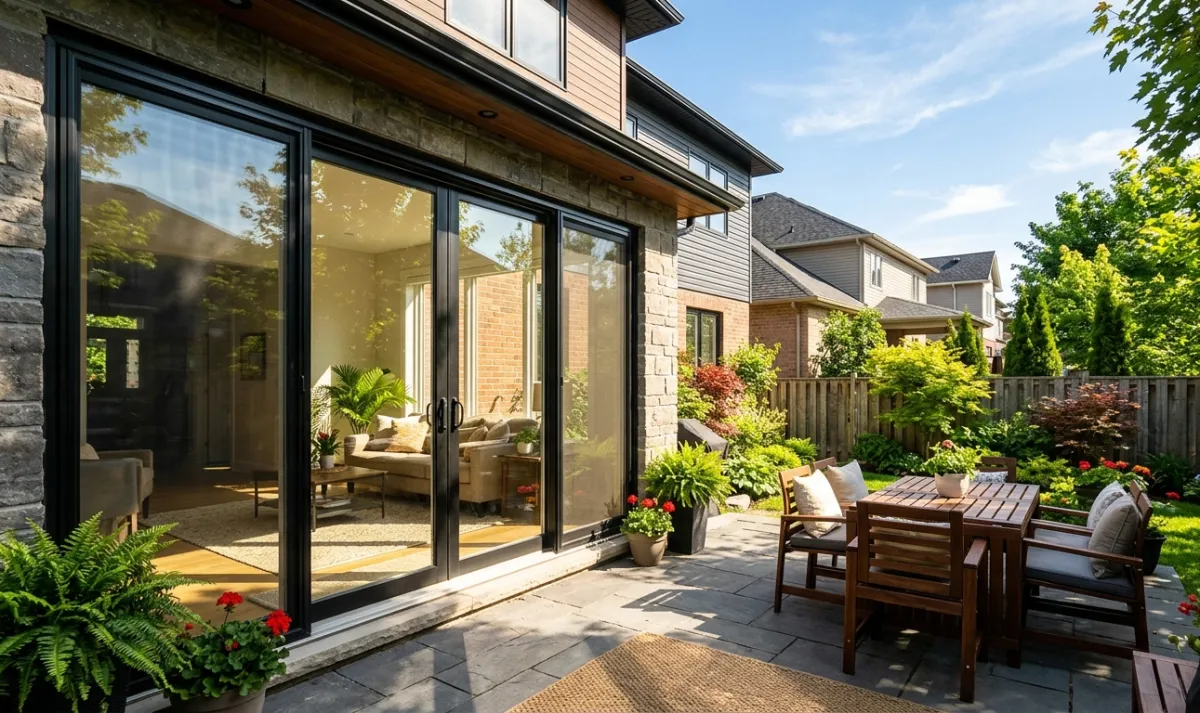
If windows are the entry point for spring heat, patio doors are the open floodgates. Sliding glass patio doors and elegant French doors feature some of the largest uninterrupted sheets of glass in any home.
Because they typically connect kitchens or primary living spaces directly to backyard decks and patios, they receive massive amounts of unobstructed sunlight. This can quickly cause:
Localized Hot Zones: Kitchens that feel like saunas by 3:00 PM, making cooking unbearable.
Drastic Temperature Imbalances: A main floor that feels stifling while the basement remains freezing cold.
Fading Furnishings: High UV exposure through uninsulated patio glass that bleaches hardwood floors, rugs, and furniture.
If your architecture features beautiful, large-format patio doors, choosing an insulated frame system with high-performance Low-E glass blends structural beauty with thermal control.
Why Certain Rooms Overheat More Than Others
Have you ever wondered why your basement feels like a refrigerator in late May while your master bedroom feels like an oven? Heat distribution is rarely uniform, and it traces back to orientation and physics.
The rooms most vulnerable to late-spring overheating include:
South-Facing Living Areas: These spaces receive steady, intense solar radiation all day long as the sun paths across the southern sky.
West-Facing Bedrooms: These rooms experience a worst-case scenario. They sit cold all morning, but absorb brutal, low-angle sunlight all afternoon, baking the room right before you try to go to sleep.
Upper Floors and Finished Attics: This is driven by standard thermodynamics—hot air naturally rises (convection), meaning the heat gathered on your main floor inevitably travels upstairs to settle in your bedrooms.
The Critical Importance of Strategic Airflow
When solar heat gets trapped inside a home, air movement becomes your first line of defense. Stagnant air allows heat to build up in pockets against your drywall and ceilings.
To manage this without running your AC unit continuously, you need to understand the concept of cross-ventilation. Opening windows arbitrarily can sometimes make your home warmer if the outdoor air is hot. Instead, wait for the cooler evening and early morning hours.
Open windows on the lower level of the shady side of your home to pull cool air in, and open windows on the upper level of the warm side to allow the rising hot air to escape. This creates a natural chimney effect that flushes out trapped heat effortlessly.
Clear Signs Your Home Has an Overheating Problem
It can be easy to shrug off late spring discomfort as just "weird weather," but your home might be sending you clear warning signs that its thermal envelope is failing:
The AC Tug-of-War: Your air conditioner is running constantly, yet certain rooms never seem to cool down.
The Window Radiator Effect: If you walk up to a closed window pane in the afternoon and can feel heat radiating off the glass from a foot away, your glazing is absorbing heat instead of reflecting it.
Radical Room-to-Room Variances: A temperature difference of more than 3°C to 4°C between different floors of the house.
Stale, Stuffy Mornings: Rooms that stay warm overnight, failing to cool down even when outdoor temperatures drop significantly.
When Overheating Signals a Deeper Structural Issue
If your home consistently struggles to maintain a comfortable temperature during mild spring days, it usually points to a combination of aging building materials, failing seals, or inadequate insulation. Patchwork solutions like heavy curtains or portable fans only mask the symptoms; they do not fix the root cause.
When you are ready to stop fighting the seasonal heat cycle and want a permanent fix, it is time to consult with local professionals like Advanced View Windows & Doors Inc.
As Ottawa's trusted window and door experts, the team at Advanced View understands the unique climate challenges of Eastern Ontario—from humid summers to freezing winters. They can evaluate your home’s current window performance, identify thermal leaks, and recommend precision-engineered window and door replacements that keep your indoor climate perfectly balanced all year long.
Final Thoughts
Overheating in late spring is a common, frustrating issue for Ottawa residents, but it doesn't have to be an inevitable part of homeownership. By recognizing how sunlight transforms into trapped infrared energy, and understanding the vital role that high-performance glass plays in reflecting that energy, you can take control of your environment.
Addressing these issues with the right strategies—and the right window upgrades—ensures your home remains a cool, comfortable sanctuary through spring, summer, and beyond.
Explore More Home Comfort Solutions
Discover the best windows for Canadian winters to ensure your spring investment pays off all winter long.
Learn more about custom installations by contacting the team at Advanced View Windows & Doors Inc. for a professional consultation.
