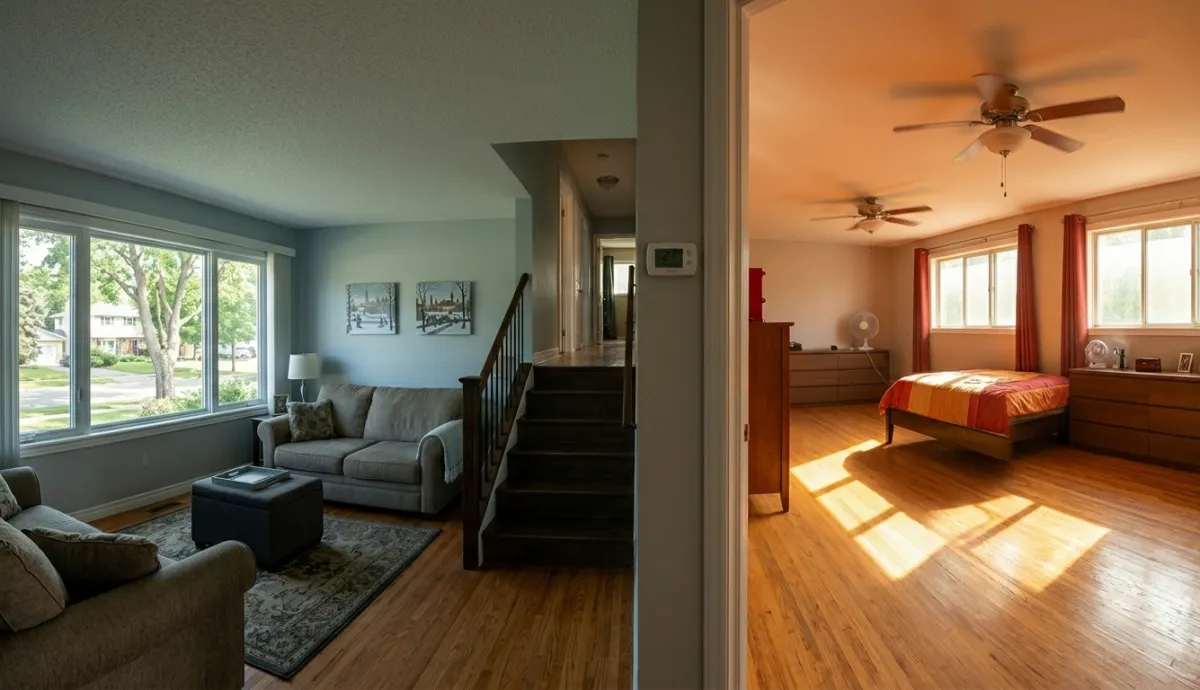
Why Some Rooms in Ottawa Homes Get Hotter
Many Ottawa homeowners notice a common issue as seasons change: some rooms in the house feel significantly hotter than others. While one room may feel comfortable, another can feel warm, stuffy, and difficult to cool down.
This uneven temperature distribution is a common household problem, especially during late spring and summer. It is often linked to how heat enters and circulates inside the home.
In many cases, the issue is connected to windows, insulation, airflow, and even the layout of the home itself. Even properties with upgraded systems installed by Advanced View Windows & Doors Inc. can still experience temperature differences depending on room orientation and exposure.
Understanding why this happens is the first step toward improving overall comfort.
Sun Exposure and Room Orientation
One of the biggest factors affecting room temperature is sun exposure.
Rooms that face south or west tend to receive more direct sunlight throughout the day. This leads to:
Increased heat buildup
Warmer surfaces
Higher indoor temperatures
Meanwhile, north-facing rooms receive less direct sunlight and tend to stay cooler.
If you’ve noticed this pattern in your home, it may be related to how sunlight enters through your windows. You can also explore how to keep your home cooler in Ottawa without overusing air conditioning for broader cooling strategies.
How Windows Influence Room Temperature
Windows play a major role in how heat enters and stays inside a room.
Older or less efficient windows often:
Allow more sunlight penetration
Provide weaker insulation
Increase heat transfer
Modern systems such as triple pane windows Ottawa help reduce this imbalance by improving insulation and limiting heat gain.
Better windows help maintain a more consistent temperature across different rooms.
The Role of Insulation in Heat Distribution
Insulation affects how well each room retains or loses heat.
Rooms with poor insulation tend to:
Heat up faster
Lose cool air quickly
Feel uncomfortable during temperature changes
This is why window insulation Ottawa solutions are often recommended for homes experiencing uneven temperatures.
Airflow and Heat Circulation
Airflow is another major factor affecting room temperature balance.
When air does not circulate properly:
Heat gets trapped in certain rooms
Cooler air fails to distribute evenly
Temperature differences become more noticeable
Improving airflow can help balance temperatures across your home.
Upper Floors and Heat Rise
In multi-level homes, upper floors are often hotter than lower levels.
This happens because warm air naturally rises. Without proper ventilation or cooling systems, heat accumulates on upper floors, making bedrooms and upstairs rooms uncomfortable.
When Room Heat Becomes a Pattern
If certain rooms are consistently hotter, it may indicate:
Poor insulation in specific areas
Inefficient windows
Air circulation problems
These issues often become more noticeable during late spring and summer.
How to Improve Temperature Balance
Homeowners can improve room temperature balance by:
Using fans to circulate air
Keeping blinds closed during peak sunlight hours
Improving insulation in problem areas
Upgrading inefficient windows
If the issue persists, consulting professionals like Advanced View Windows & Doors Inc. may help identify deeper causes.
Final Thoughts
Uneven room temperatures are a common issue in Ottawa homes, especially during warmer months. However, they are often manageable once the root causes are understood.
By improving insulation, airflow, and window performance, homeowners can create a more balanced and comfortable living environment.
